
Do you like our content?
Add TN as a preferred source on GoogleFrom France to Italy, via Spain, Belgium, Portugal and Germany, autumn 2026 has been marked by demonstrations and calls for strikes.
The cost of living, housing, wages and public services are at the forefront of protesters’ demands, alongside education, pensions and military spending, depending on the country. Yet behind these shared concerns lie movements with very different origins, timelines and government responses.
Describe your project in 2 minutes.
LOOKING FOR A NEW PROPERTY IN TUNISIA? Receive a personalised selection of new-build developments tailored to your budget and preferred region.
— Free · Fast · No obligation — Comprehensive support for Tunisians living abroad
Start my search →
As of Saturday, 31 October 2026, the wave of protests combines demonstrations that have already taken place, new rallies announced for this weekend and several strike days scheduled for November. This is neither a Europe-wide general strike nor a single movement coordinated across the continent. Understanding what is at stake requires distinguishing between the causes of public anger, the decisions actually taken by governments and the next key dates.
Key figures behind the wave of social unrest
3.8%: Annual inflation in the eurozone in September 2026, up from 3.2% in August, according to Eurostat.
410,000 to 800,000: The number of participants in demonstrations across France on 24 October, according to the Interior Ministry and trade unions, respectively.
More than 40 cities: Italian cities where demonstrations were announced in connection with the USB strike on 30 October, according to Reuters.
11 and 20 November: Dates of the general strikes announced in Spain and Italy, respectively. These announcements do not mean that a general strike has been confirmed everywhere else.
France: Anger that began in secondary schools and spread to wages and public services
The French movement took shape in September 2026, initially focusing on school conditions, including cancelled classes, teacher shortages, overcrowded classrooms and deteriorating school buildings. In October, its scope widened to include purchasing power, wages, pensions and public service budgets. Trade unions, students, teachers and groups associated with the “Yellow Vests” movement have joined the protests, although they do not necessarily share all the same demands.
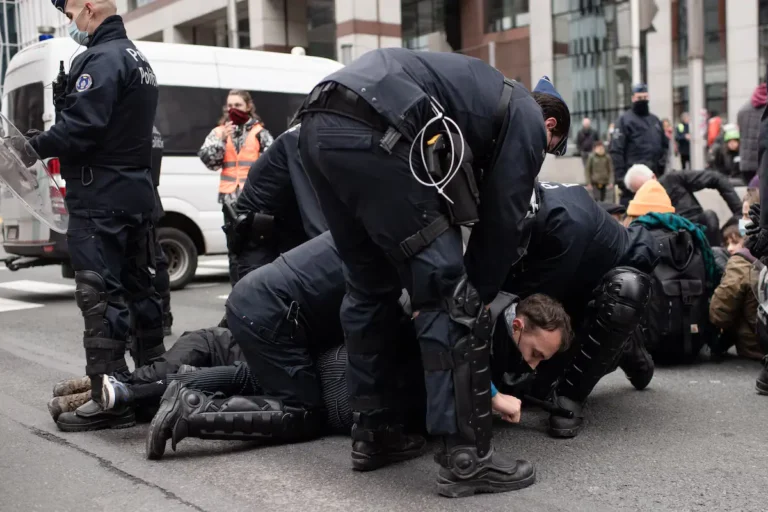
The demonstrations of 17 and 24 October marked two major milestones. On 24 October, the Interior Ministry put the number of protesters at 410,000, compared with 800,000 according to trade unions. Some marches were marred by violence and property damage, particularly on 17 October. However, the majority of demonstrators should not be associated with these incidents.
Government response: Following talks with secondary school students, Sébastien Lecornu’s government unveiled several measures on 26 October. These include the announced replacement of the Parcoursup university admissions platform from the 2028 academic year, 15,000 additional higher education places between 2027 and 2028, a gradual cap of 28 students per class in the second year of secondary school, and a €4 billion loan package to renovate school buildings. These are commitments and programmes with different implementation schedules, not measures that have already been fully implemented.
The announcements have not brought the movement to an end. On wages and budgetary priorities, trade unions consider the government’s response inadequate. The CFDT, CGT, FO, UNSA and FSU have called for a nationwide day of strikes and demonstrations on Thursday, 5 November. Their demands include wage negotiations, increases in the minimum wage and pensions, greater funding for public services, job creation and what they consider to be a fairer tax system.
For the demonstrations scheduled for 31 October, Interior Minister Laurent Nuñez announced the deployment of 70,000 police officers and gendarmes. In Paris, the authorities approved a route along the city’s outskirts, between Porte de Bagnolet and Porte de Charenton, following a ruling by the Council of State. According to the government, this security arrangement is intended to protect people and businesses. However, it has been challenged by organisations denouncing restrictions on the right to demonstrate.
Next milestone: The 5 November action will provide an indication of the unions’ ability to turn the weekend demonstrations into work stoppages across both the public and private sectors. Developments will also depend on negotiations over wages, education and the 2027 budget.
Italy: A general strike on 30 October, with another announced for 20 November
In Italy, demonstrations have intensified since the beginning of October, focusing on the cost of living, low wages, military spending, healthcare, education and housing. The grassroots union USB called a 24-hour general strike for Friday, 30 October, with demonstrations planned in more than 40 cities.
Reuters reported that tens of thousands of students and workers took part in the demonstrations, which were largely peaceful. In Genoa, around 15,000 people, including dockworkers and students, gathered at the port to protest, among other things, against its use for arms shipments. Incidents were also reported in Turin, Rome and Milan, prompting police intervention.
Government response: Transport Minister Matteo Salvini signed an order on 27 October calling for the postponement of the strike in several transport sectors, citing rules on service continuity surrounding the 2 November commemoration. USB challenged the order and announced that it would maintain its strike call despite the risk of sanctions. It is therefore important to distinguish between the existence of the general strike and the legal status and actual extent of work stoppages in individual transport sectors.
On the economic front, Giorgia Meloni’s government approved a draft 2027 budget on 28 October, containing approximately €26 billion in tax and spending measures, according to Reuters. The question remains whether its provisions will address demands for stronger purchasing power and better-funded public services.
The main trade union confederation, CGIL, has also confirmed a nationwide general strike for Friday, 20 November, covering both the public and private sectors. Its demands include higher wages, improved pensions, progressive taxation, increased funding for hospitals and schools, and a reallocation of public spending towards social needs rather than rearmament.
Next milestone: 20 November will constitute another major test of social mobilisation, separate from the action organised by USB on 30 October. Its impact will depend on participation across businesses and workplaces, budget negotiations and any subsequent government response.
Spain: Housing at the heart of the 11 November general strike
In Spain, protests intensified from late September onwards, with demonstrations against soaring rents, evictions, property speculation and the growing difficulty workers face in securing affordable housing. These demands subsequently converged with those of the major trade union confederations on wages, job insecurity and working hours.
A broad coalition comprising the CCOO, UGT, CGT and CNT unions, together with tenants’ organisations, filed a 24-hour general strike notice on 19 October for Wednesday, 11 November. The movement brings together social demands and the right to affordable housing.
Government response: Pedro Sánchez’s government approved two decree-laws on 6 October containing provisions on housing supply, rental stability, evictions involving vulnerable people and certain speculative practices. The texts were published on 7 October. Their legal status depends on their entry into force and the parliamentary ratification procedures. The government presents these measures as an urgent response, while trade unions and tenants’ associations argue that more far-reaching change is needed.
The strike will take place against a particular electoral backdrop, with early general elections scheduled for 29 November 2026. This timing gives the demands greater political visibility, although it offers no basis for predicting either the election result or the scale of the mobilisation.
Belgium: Trade unions challenge austerity and prepare for 23 November
In Belgium, social tensions have intensified throughout autumn 2026, culminating in a major demonstration in Brussels on 9 October. The protest against the budgetary policies of Bart De Wever’s government brought together 30,000 people, according to police, and 50,000, according to trade unions. Teachers, students, railway workers, civil servants and public service advocacy groups were represented. Clashes on the fringes of the marches should not be indiscriminately attributed to all demonstrators.
The FGTB and CSC unions oppose spending cuts and measures affecting pensions, benefits and public services. The FGTB has identified three red lines: any infringement of wage indexation, an increase in VAT and the compulsory annualisation of working hours. Trade unions are calling for greater contributions from high-net-worth individuals and capital income.
Government response: The governing coalition maintains that restoring public finances and containing the budget deficit are necessary. So far, the demonstrations have not prompted any announced withdrawal of all the contested reforms. The authorities have also stepped up public order measures following several incidents, particularly in Brussels and Liège.
On 23 November, the CSC, FGTB and Synova are calling for a major nationwide mobilisation in Brussels, which could be accompanied by absences or walkouts in certain sectors. The FGTB had also raised the possibility of a general strike during the week of 23 November if its red lines were crossed. However, the announced demonstration and a formally confirmed general strike are not the same thing.
Portugal: Housing crisis, protest encampments and criticism of the police response
In Portugal, housing-related protests began in Porto on 10 October before spreading to Lisbon and other cities. Demonstrators are targeting, in particular, a reform of rental legislation that received preliminary parliamentary approval in late September. Protesters accuse the proposed changes of making evictions easier and weakening tenants’ rights. Activist groups are calling for affordable rents, protection against evictions without rehousing, more public housing and tighter regulation of certain property acquisitions.
Following the establishment of protest encampments, police dispersed demonstrators in Lisbon and Porto during the night of 24–25 October. According to the Portuguese press, 31 people were detained during operations in the two cities. Reports of injuries varied depending on the source and the time of publication. Protests continued outside Parliament on 27 October, with further demonstrations scheduled for 31 October.
Government response: Prime Minister Luís Montenegro is defending the rental reform as a means of stimulating housing supply. On 27 October, he stated that public investment in housing had increased fivefold over two and a half years and that more than 32,000 homes had been completed using funds from the recovery plan. These figures were provided by the government and should not be taken as evidence that difficulties in accessing housing have been resolved. Montenegro also defended the police response, while investigations have been launched into the circumstances surrounding the operations.
Portugal’s main trade union confederations have not confirmed a nationwide general strike for 11 November, despite calls from activists for joint action across the Iberian Peninsula with Spain. However, CGTP announced a nationwide demonstration in Lisbon on 21 November, followed by an action outside Parliament on 24 November. A sector-specific strike in public administration is also scheduled for 20 November. The confederation is demanding a general wage increase of at least 15% in 2027, with a minimum increase of €150, and a minimum wage of €1,100.
Germany: Young people demonstrate for education and against conscription
In Germany, a new nationwide mobilisation has been announced for 31 October by the Gen Z regelt collective, with demonstrations planned in around 30 cities, including Berlin, Hamburg, Munich and Frankfurt. Organisers claim that more than 160,000 people have expressed their intention to participate online. This figure does not represent an actual count of demonstrators present at the rallies.
The protesters’ demands focus on education funding, housing costs, healthcare services, climate issues and opposition to the return of compulsory military conscription. The mobilisation follows student protests and symbolic blockades at certain university campuses in late October. However, representatives of student organisations are not unanimous regarding the methods and leadership of the collective behind the calls for demonstrations.
Authorities’ response: The federal Interior Minister and several regional officials have said they intend to safeguard peaceful demonstrations while preparing for possible disturbances. Additional police deployments have been announced in Berlin. At the time this report was prepared, no new nationwide measure addressing all the collective’s demands had been established. Initial participation figures and whether the gatherings remain peaceful will therefore have to be assessed after the demonstrations take place.
Greece and Albania: Two movements of a different nature
In Greece, demonstrations began in Athens as early as 13 October, focusing on student housing. On 20 and 21 October, school pupils, students and teachers took to the streets in several cities to demand additional education funding, better infrastructure, less overcrowded classrooms and assistance with rental costs. In Athens, Reuters reported that around 10,000 people took part in the 21 October mobilisation, according to police figures. Education Minister Sofia Zacharaki said she was listening to the demands and defended the support measures in place, while rejecting prolonged school blockades.
In Albania, the protests have a more explicitly political dimension. Demonstrations began on 31 May against a property development project in a protected natural area. Since 13 October, the arrival of students has broadened the movement to include allegations of corruption, employment, education and calls for Prime Minister Edi Rama to resign. Clashes occurred, notably on 24 October in Tirana. The head of government accused violent groups of infiltrating the demonstrations, a political interpretation that official statements alone are insufficient to establish as applying to all participants.
Europe’s social calendar: Key dates to watch
| Date | Country and mobilisation |
|---|---|
| 31 October | Demonstrations announced in France, Germany and Portugal |
| 5 November | France: nationwide inter-union day of strikes and demonstrations |
| 11 November | Spain: announced 24-hour general strike |
| 20 November | Italy: CGIL general strike; Portugal: public administration strike |
| 21 November | Portugal: CGTP nationwide demonstration in Lisbon |
| 23 November | Belgium: nationwide trade union mobilisation in Brussels; the possibility of a general strike remains a separate matter |
| 24 November | Portugal: trade union action outside Parliament during the scheduled final budget vote |
Dates announced by trade union organisations and authorities as of 31 October 2026. Scheduled actions may change; the calendar does not predict participation levels or the actual extent of disruption.
Why are these protests converging?
Rising energy prices have aggravated a series of existing difficulties, particularly housing, wages and the funding of public services. According to Eurostat, annual inflation in the eurozone reached 3.8% in September 2026, compared with 3.2% in August. Energy prices rose by 18.8% year on year in September. These are statistical indicators for the eurozone and do not reflect the situation in every European country in exactly the same way.
Nevertheless, demands vary considerably from one country to another. Education and wages dominate in France; purchasing power, public services and public spending priorities are driving mobilisation in Italy and Belgium; housing is central to protests across the Iberian Peninsula; while in Germany, the debate also encompasses military service. Albania’s situation is additionally shaped by a crisis of confidence in institutions. It would therefore be misleading to speak of a common leadership or a single platform of demands.
Three possible developments in November
Scenarios to watch, rather than certain predictions
Sector-specific compromises: Further concessions on wages, education budgets or housing could limit some work stoppages without resolving all the protesters’ demands.
An expansion of strike action: If negotiations fail and major trade union confederations succeed in sustaining mobilisation, the planned actions on 5, 11, 20 and 23 November could increase pressure on governments. However, no general Europe-wide coordination has been confirmed.
Growing tensions over public order: Further incidents or new restrictions on demonstrations could shift part of the debate towards civil liberties, while complicating discussions over purchasing power.
The most useful indicators for monitoring developments will be strike participation rates, the number of sectors actually brought to a standstill, agreements reached and changes to budgetary or regulatory legislation. At this stage, there is no evidence that any European government will fully concede to all the demands, nor that an escalation is inevitable.
What are the implications for Tunisia?
These movements concern some of Tunisia’s major economic partners. According to the National Institute of Statistics (INS), 70.2% of Tunisian merchandise exports were destined for the European Union during the first nine months of 2026, representing a total value of 35,386.3 million dinars.
Over the same period, the value of Tunisian exports increased by 5.4% to France, 5% to Italy and 3.9% to Germany.
Potential consequences of the strikes could be felt through transport and logistics, the operations of client companies, certain business and tourism trips and, over the longer term, European demand.
For Tunisians living in Europe, issues relating to income, housing and public services are also of direct concern. However, it would be premature to attribute any change in Tunisian exports or remittance flows to these demonstrations without specific statistical evidence.
Europe’s autumn of social unrest therefore has no single outcome. Some governments have initiated reforms or discussions, while trade unions are preparing further days of action. November will primarily show whether the protests lead to sector-specific negotiations, wider disruptions or prolonged political debates.
Do you like our content?
Add TN as a preferred source on Google
What's happening in Tunisia?
Subscribe to our Youtube channel for updates.