Do you like our content?
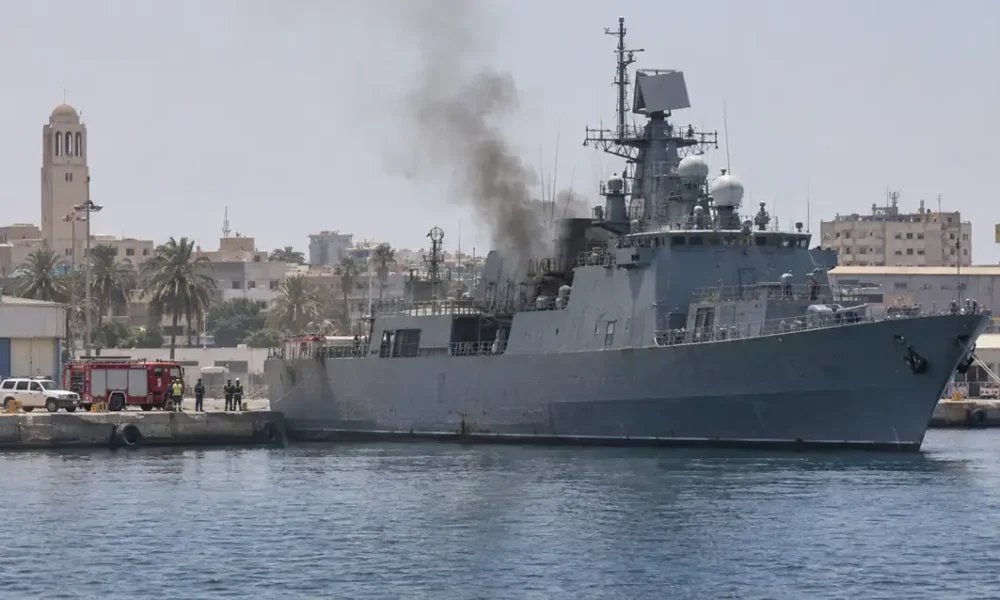
Add TN as a preferred source on GoogleThe reported targeting of two Russian vessels off the Libyan coast has raised questions about whether the confrontation between Russia and Ukraine is expanding into the Mediterranean, and what potential security and strategic implications such a development could have for neighboring countries, particularly Tunisia.
On Monday, November 23, 2026, Ukraine claimed responsibility for targeting two Russian vessels off the Libyan coast, according to reports, just hours after the United Nations reportedly called for an investigation into attacks near the city of Benghazi.
The developments have renewed questions about Libya’s position in the geopolitical rivalry between major world powers and the potential consequences for regional security and Tunisia’s strategic interests.
Speaking exclusively to Tunisie Numérique, former Tunisian Foreign Minister and diplomat Ahmed Ounaies argued that Tunisia is not a direct target of the powers involved in international confrontations. He emphasized that the tensions affecting the region should be understood within a broader geopolitical transformation extending well beyond the Russia-Ukraine conflict.
Ahmed Ounaies: Tunisia is not a direct target of major powers
According to Ahmed Ounaies, Tunisia’s position in the global strategic landscape does not necessarily place it at the center of the calculations of competing international powers.
He stressed the importance of distinguishing between the indirect consequences of regional and international developments and deliberate targeting by foreign powers.
Ounaies explained that geopolitical rivalries can extend across different regions without necessarily making neighboring countries direct targets.
In this context, the former foreign minister called for a realistic assessment of current geopolitical transformations, warning against overestimating Tunisia’s position in the strategic calculations of the major powers.
He also emphasized the importance of maintaining established strategic and defense cooperation arrangements while developing a broader regional perspective that goes beyond the ongoing confrontation in Europe.
Such an approach, he argued, should take into account the changing strategic environment in the Mediterranean and Tunisia’s long-term national interests.
Libya caught between internal divisions and international rivalries
Turning to Libya, Ahmed Ounaies described the country’s prolonged instability and political divisions as major factors contributing to its vulnerability to foreign influence.
He noted that more than a decade of internal conflict, combined with Libya’s substantial natural resources, has made the country a focal point for competing international interests.
According to his analysis, the continued involvement of external powers has complicated the Libyan crisis, with international actors pursuing their own strategic and economic objectives.
Ounaies argued that the fundamental problem lies in the inability of Libya’s rival factions to overcome their internal divisions and place national interests above the calculations of influential foreign powers.
He believes that this situation has weakened Libya’s ability to determine the course of its own political and security future.
From this perspective, the reported incidents near Benghazi must be considered within a wider regional and international context.
However, the available statements do not establish the specific military objectives or operational circumstances behind the reported targeting of the Russian vessels.
A global confrontation extending beyond Europe
Ahmed Ounaies maintained that the rivalry between major international powers is no longer confined to Europe.
Instead, he described an increasingly global confrontation involving several geographical regions, including Europe, Asia and the Mediterranean.
According to the former foreign minister, strategic, economic and military interests intersect across these regions, turning local and regional disputes into arenas of wider international competition.
He argued that major powers primarily pursue their own national interests, often without giving sufficient consideration to the priorities of countries directly affected by these confrontations.
In his view, understanding developments in Libya requires placing them within this broader global strategic framework rather than treating them as isolated events.
This interpretation suggests that tensions in the Mediterranean cannot necessarily be separated from wider changes in international power relations.
What are the potential consequences for Tunisia?
Regarding Tunisia’s position, Ahmed Ounaies reiterated that the country does not appear, in his assessment, to be a direct target in the ongoing rivalry between major powers.
Nevertheless, he emphasized the need for Tunisian policymakers to remain attentive to the changing international environment and its implications for regional security.
He advocated maintaining existing strategic arrangements while developing a long-term vision capable of addressing emerging geopolitical challenges.
According to Ounaies, Tunisia should approach international developments from a perspective that goes beyond immediate events and considers national interests, regional balances and evolving global dynamics.
His analysis highlights an important distinction between the risks associated with the geographical expansion of international rivalries and evidence of a direct security threat to Tunisia.
The reported attack on the Russian vessels does not, in itself, establish that Tunisia is being targeted or faces an imminent military threat.
Furthermore, Ounaies did not identify any specific immediate military or security consequences for Tunisian territory. His assessment focused primarily on the broader strategic implications of international competition in the region.
Toward a new world order dominated by major-power interests
Beyond the developments in Libya, Ahmed Ounaies argued that the international system is undergoing a fundamental transformation.
He believes that the emerging global order differs significantly from the framework established following the adoption of the United Nations Charter.
According to his assessment, international relations are increasingly shaped by the strategic priorities of major powers, whose interests play a decisive role in determining the direction of conflicts and the distribution of global influence.
Ounaies expressed concern that countries and regions caught in international confrontations often find their own national interests marginalized.
He suggested that the priorities of populations directly affected by these conflicts do not necessarily carry significant weight in the calculations of the competing powers.
For the former Tunisian foreign minister, this development reflects a broader transition toward an international order characterized by growing competition for influence, resources and strategic advantages.
This competition, he noted, is unfolding across several regions, including Europe, Asia and the Mediterranean.
Tunisia’s position amid changing geopolitical balances
Ahmed Ounaies’ remarks offer a broader interpretation of the reported developments off the Libyan coast.
Rather than viewing the incidents solely through the lens of the Russia-Ukraine conflict, he places them within an international environment increasingly shaped by competition between major powers.
His assessment also underlines the importance of distinguishing between regional instability and a direct threat to Tunisia.
While the country’s proximity to Libya makes developments in its eastern neighbor particularly relevant, geographical proximity alone does not establish that Tunisia is a target of international military confrontations.
For Ounaies, the central challenge lies in understanding the changing global balance of power while preserving Tunisia’s national interests and maintaining a long-term approach to regional security.
Do you like our content?
Add TN as a preferred source on Google
What's happening in Tunisia?
Subscribe to our Youtube channel for updates.