
Do you like our content?
Add TN as a preferred source on GoogleNew York, Brussels, Helsinki: This week illustrated the different fronts on which Ukraine is now seeking to weaken Russia’s ability to continue the war. At the United Nations, Volodymyr Zelensky defended strikes against Russian oil infrastructure and called on partners to reduce the revenues that allow Moscow to finance its offensive. The European Union extended for three years sanctions targeting more than 3,000 individuals and entities and approved nearly €3 billion in additional support for Ukraine. In Finland, a further step was also taken towards the establishment of a Special Tribunal for the crime of aggression.
The essentials
Zelensky says Russia suffered 248,964 soldiers killed or seriously wounded between January and August 2026; this Ukrainian figure cannot be independently verified.
Kyiv says it is ready for a ceasefire and reciprocal de-escalation measures, particularly in the energy sector, while diplomatic discussions continue.
The EU has extended for 36 months individual sanctions targeting more than 3,000 people and entities, until September 22, 2029.
The EU Council approved an eighth payment of nearly €3 billion under the Ukraine Facility.
Finland has submitted to Parliament the agreements concerning the Special Tribunal for the crime of aggression and the future International Claims Commission for Ukraine.
Kyiv wants to turn its experience in drones and air defence into an asset for European security.
At the UN, Ukraine seeks to shift the balance of power
The 81st session of the United Nations General Assembly was not simply another opportunity for Kyiv to call for greater assistance.
The Ukrainian message has evolved.
After more than four years of full-scale war, Ukraine is now seeking to convince its partners that it is no longer enough to help it resist: the resources enabling Russia to continue its aggression must also be reduced in concrete terms.
Addressing the General Assembly, Volodymyr Zelensky placed Russian revenues, military production, energy exports and international networks that allow Moscow to continue the war at the centre of his speech.
For Kyiv, as long as Russia retains the financial resources needed to replace equipment, produce missiles and drones, recruit soldiers and maintain its military apparatus, it retains the ability to prolong the conflict.
Striking oil to reduce war-making capacity
This strategy directly explains Ukrainian strikes against Russian refineries, oil depots and energy infrastructure.
Kyiv no longer presents these operations simply as acts of retaliation.
They are part of an economic strategy targeting a sector that is essential to Russian state revenues and the financing of its war effort.
In New York, Zelensky stressed that Ukraine’s objective was not to target oil for its own sake, but to reduce Russia’s ability to finance and prolong the war.
The logic is now clear: international sanctions abroad and long-range strikes against energy infrastructure inside Russia.
Both instruments pursue the same objective: gradually increasing the economic cost of the aggression.
248,964 Russian losses in eight months, according to Kyiv
Zelensky also sought to demonstrate that, despite the considerable human losses incurred by Moscow, Russia had not achieved the strategic result it was seeking.
According to figures presented by the Ukrainian president, the Russian army recorded 248,964 soldiers killed or seriously wounded between January and August 2026.
The Ukrainian president said these losses had enabled Moscow to capture only slightly more than 1,000 square kilometres during the same period, part of which was subsequently retaken by Ukrainian forces.
Despite an extremely heavy human cost, Moscow has still not achieved a decisive military victory.
For Zelensky, this situation should convince Western partners that additional pressure could still influence the Kremlin’s calculations.
Kyiv: ready for a ceasefire, but not unilaterally
Ukraine simultaneously says it is ready for a complete ceasefire.
But Kyiv rejects the principle of halting its operations unilaterally while Russia retains the ability to continue its attacks.
The same position applies to energy and the Black Sea: Kyiv says it is prepared to suspend certain strikes if Moscow agrees to reciprocal measures, particularly concerning energy and port infrastructure.
Ukraine’s objective is to prevent a ceasefire from becoming simply a pause that would allow Russia to reorganise without any reciprocal commitment.
UN warns of a new and dangerous phase of the war
The Security Council met on September 23 to examine the situation in Ukraine.
Rosemary DiCarlo, UN Under-Secretary-General for Political and Peacebuilding Affairs, warned that the war was entering a “new dangerous phase”, marked by an increase in attacks, civilian casualties and the risk of regional spillover.
According to the United Nations, more civilians were killed or injured in Ukraine during the first eight months of 2026 than during the whole of 2025.
Since February 2022, the UN has recorded at least 17,257 civilians killed in Ukraine, including 835 children, and more than 53,000 injured.
The organisation is calling for an immediate, complete and unconditional ceasefire, as well as peace that respects Ukraine’s sovereignty and territorial integrity.
Moscow’s war is becoming increasingly international
One of the strongest messages in Zelensky’s speech concerned the growing involvement of foreign actors in the war.
North Korea has already sent military personnel to support Russian forces.
Kyiv also says nationals from 47 countries have been found among Russian forces or among fighters engaged alongside Moscow.
Zelensky specifically mentioned Ghana, Nepal, Tajikistan, India, Yemen, Kenya, Zimbabwe, Cuba, Belarus, Sudan and South Africa.
The Ukrainian president said some of these men had allegedly been recruited through misleading promises before being sent to the front.
Cooperation with Pyongyang is another concern for Kyiv.
Russia benefits from North Korean soldiers, ammunition and other forms of military support. In return, Ukraine believes North Korea is gaining operational experience and may improve its missile and drone capabilities.
For Zelensky, this demonstrates that technologies and methods of warfare tested in Ukraine can subsequently be used elsewhere.
Black Sea: a global food security issue
The war is also being fought along maritime routes.
Ukraine accuses Moscow of seeking to reduce its ability to export grain and agricultural products through the Black Sea.
These exports supply food to numerous countries in Africa, the Middle East and Asia.
Kyiv therefore stresses the need to sustainably secure port infrastructure and trade corridors.
The UN also considers the deterioration of maritime security in the Black Sea and the Sea of Azov to be a threat to global food security.
For Ukraine, free access to the Black Sea is therefore an economic, strategic and humanitarian issue at the same time.
The risk of the war spilling over into Europe
The Ukrainian message this week also carried another warning: the war may not necessarily remain confined to Ukrainian territory.
For several months, Kyiv has warned of cyberattacks, sabotage, disinformation campaigns and drone-related incidents in several European countries.
At the UN, Zelensky stressed that several European leaders now had, according to him, information concerning Russian intentions beyond Ukraine.
The Security Council has also referred to the growing number of cross-border incidents and the increasing risk of regional spillover.
For Kyiv, this reinforces the idea that Ukraine’s defence and European security are now directly interconnected.
Ukraine seeks to move from aid recipient to security provider
Kyiv is simultaneously seeking to turn four years of wartime experience into a strategic advantage for Europe.
This is particularly visible in the field of drones.
Ukraine now has an industry developing aerial, maritime and ground drones, as well as detection and interception systems adapted to high-intensity warfare.
Zelensky has proposed cooperation agreements with partners known as “Drone Deals”, aimed at sharing this experience and jointly developing production capabilities.
The political message is clear: Ukraine no longer wants to be seen solely as a consumer of Western weapons.
It wants to become a provider of technology, operational experience and security for Europe.
FREYJA: Ukrainian experience put at the service of European defence
This ambition is reflected in particular in the FREYJA ballistic missile defence programme.
Ten countries are already participating in the coalition:
Ukraine, Denmark, France, Germany, Italy, the Netherlands, Norway, Spain, Sweden and the United Kingdom.
The objective is to develop a joint ballistic missile defence capability that can be produced on a larger scale and at a lower cost than the most sophisticated systems currently in use.
FREYJA is not intended to replace Patriot or SAMP/T systems already used in Europe.
The project is intended to complement them.
For Kyiv, the initiative illustrates a major evolution: military experience gained while defending against the Russian invasion is now becoming a resource for European security.
EU keeps more than 3,000 sanctions in place until 2029
In Brussels, economic pressure on Moscow has entered a new phase.
On September 22, the Council of the European Union decided to extend for 36 months, until September 22, 2029, individual sanctions targeting more than 3,000 people and entities linked to actions undermining Ukraine’s sovereignty and territorial integrity.
The measures include:
asset freezes, travel restrictions and a ban on making funds or economic resources available to sanctioned individuals and entities.
The objective is to reduce Russia’s ability to continue the war, particularly by limiting its revenues, access to critical technologies and the resources available to its military-industrial complex.
The three-year extension also provides greater predictability for the European sanctions regime and prevents Moscow from relying on a rapid reversal of the sanctions.
Kyiv wants to maintain pressure on Moscow
For Ukraine, this pressure must not weaken as long as the aggression continues.
For several months, Kyiv has maintained a consistent position: sanctions must become costly enough to affect the Kremlin’s economic and political calculations.
This approach also explains Ukrainian criticism when a Russian individual is removed from a sanctions list.
From Kyiv’s perspective, any rapid easing risks sending Moscow the message that it can simply wait for Western pressure to gradually erode.
Nearly €3 billion more for Ukraine
Europe is simultaneously maintaining its financial support for Ukraine.
On September 24, the Council of the European Union approved the eighth regular payment under the Ukraine Facility, worth nearly €3 billion.
Around €800 million of this amount will come, for the first time, from the new Ukraine Support Loan.
The payment also reflects progress in Ukraine’s reform programme.
Kyiv has completed ten new steps and has now reached 84 of the 95 targets planned at this stage, or around 88%.
The funds are used in particular to maintain public administration, support macroeconomic stability, finance reconstruction and advance reforms linked to closer integration with the European Union.
Following this new payment, Ukraine will have received more than €32 billion under the facility since its launch.
Finland: progress also on the justice front
The final front of the week is neither military nor economic.
It is judicial.
On September 24, the Finnish government submitted to Parliament the necessary texts to accept and implement the agreement concerning the Special Tribunal for the crime of aggression against Ukraine, as well as the convention establishing an International Claims Commission for Ukraine.
The Tribunal is intended to address a question that existing judicial proceedings cover only partially:
Who bears criminal responsibility for the decision itself to launch a war of aggression?
Other international courts can prosecute war crimes, crimes against humanity or acts of genocide when these crimes are established.
The Special Tribunal directly targets the crime of aggression, meaning responsibility linked to the decision to launch an armed attack against another state.
Tribunal, damages and compensation
Kyiv is seeking to build an international judicial architecture consisting of three levels.
The Special Tribunal is to address criminal responsibility linked to the aggression.
The Register of Damage records losses and harm caused by the war.
The International Claims Commission is intended to provide the mechanism needed to examine compensation claims.
Finland states that the Tribunal and the Commission are to operate within the framework of the Council of Europe and be based in The Hague.
The objective is to ensure that Ukraine’s reconstruction does not rest solely on Ukrainian and Western taxpayers, but that legal responsibility can also be pursued for the damage caused by the aggression.
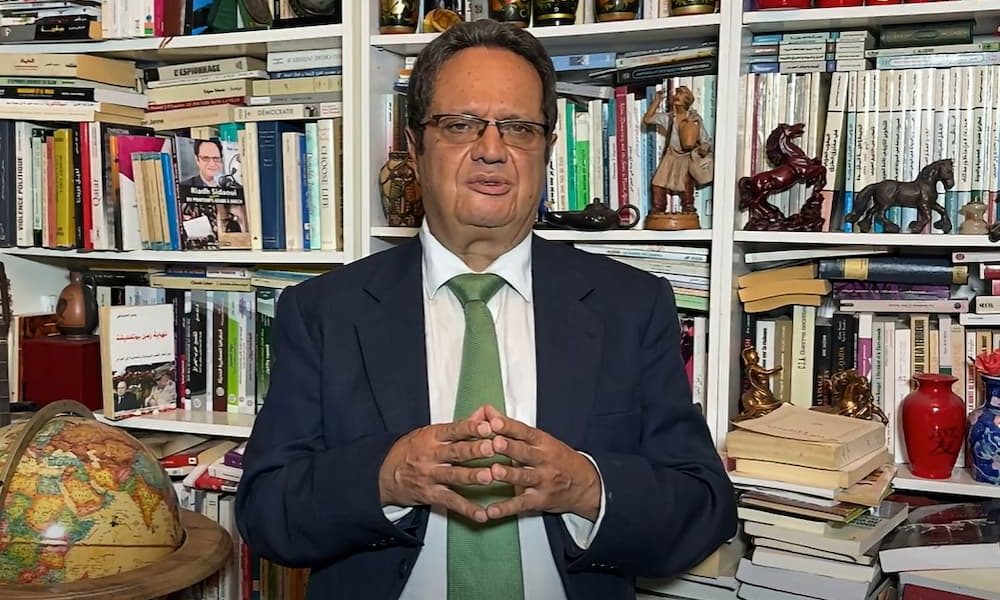
Volodymyr Khomanets, Ambassador of Ukraine to the Republic of Tunisia and to the State of Libya with joint accreditation, summarises the Ukrainian approach as follows:
“Today, Ukraine, together with its partners, is building the international justice infrastructure that is needed — the Special Tribunal, the Register of Damage and the Compensation Commission. This infrastructure is intended to ensure that those responsible are held accountable and that the damage caused by Russia is subject to fair compensation.
This is not only about addressing the consequences of Russia’s war, but also about holding accountable those responsible for the very decision to commit an act of aggression.
Since the Nuremberg trials, the international community has not undertaken such a comprehensive and coordinated effort to ensure accountability for the crime of aggression.
Ukraine believes that justice for the aggressor is an essential condition for lasting peace and the prevention of future acts of aggression.”
A strategy that is becoming clearer
This week provides a clearer picture of the approach Kyiv is seeking to establish with its partners.
It relies on several simultaneous levers:
maintaining military resistance to prevent a Russian victory on the battlefield;
reducing Russian revenues and production capabilities;
maintaining international sanctions;
preserving funding for the Ukrainian state and reconstruction;
turning Ukrainian military experience into a European defence capability;
and preparing now the judicial and financial mechanisms for the post-war period.
The objective, therefore, is not solely to inflict losses on Russia.
It is also to convince the Kremlin that time is no longer necessarily working in its favour.
Turning pressure into an instrument for peace
This is perhaps the central political message carried by Ukraine to New York.
Kyiv says it wants peace and is ready for a ceasefire.
But its experience since February 2022 has led Ukrainian authorities to consider that simply calling for dialogue is not enough.
In their view, lasting peace can emerge only when Moscow has a greater interest in ending the war than in continuing it.
This explains the coherence between the main developments of the week:
weakening the economic resources used to finance the offensive;
maintaining European sanctions;
ensuring Ukraine’s economic resilience;
strengthening European defence;
and building the mechanisms that will one day make it possible to prosecute aggression and compensate its victims.
Kyiv is therefore no longer asking the world merely to help it survive.
It is now seeking to convince its partners that the best way to prevent Russia from prolonging this war is to gradually reduce its economic, military and political capacity to continue it, while preparing the conditions for peace based on Ukrainian sovereignty and international law.
Do you like our content?
Add TN as a preferred source on Google
What's happening in Tunisia?
Subscribe to our Youtube channel for updates.